
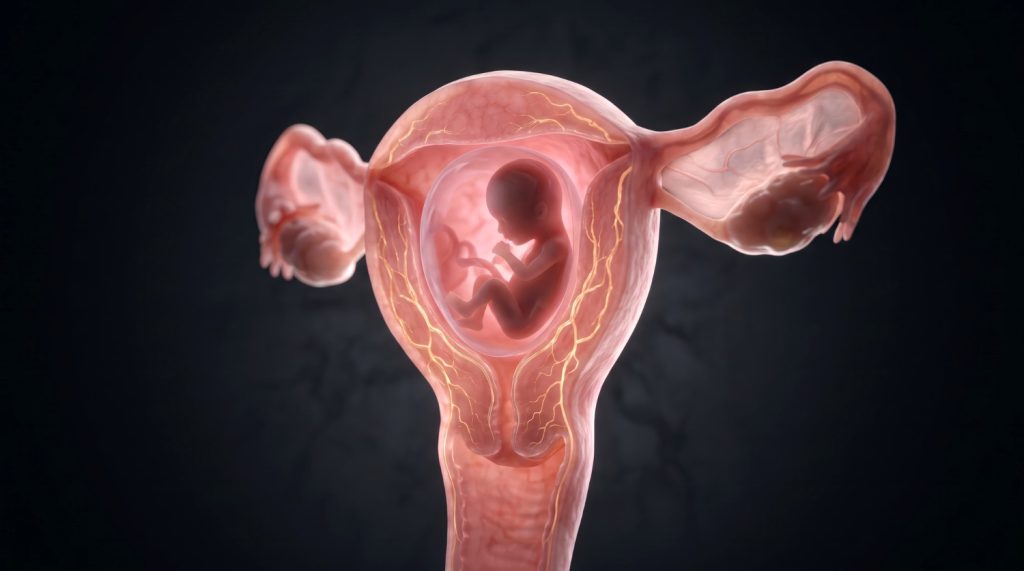
Endometrial Factors That Can Affect Embryo Implantation
October 24, 2026
The doctor said the embryo looked perfect. You took every medicine and followed every instruction. So a negative result has you asking what went wrong.
Many couples replay the cycle, wondering about rest or diet, but a failed transfer rarely has one cause.
Implantation is the step where the embryo attaches to the wall of the uterus, burrows in slightly, and begins to grow. Hormones such as progesterone help support this early connection. For this to happen, the embryo needs a uterine lining, called the endometrium, that hormones have prepared at the right time. An embryo grade shows how the embryo looks, but not how ready the lining is.
This blog explains how the endometrium and embryo implantation are linked, and which endometrial factors affecting embryo implantation may matter.
What Factors Affect Embryo Implantation?
Embryo implantation depends on the developing embryo and the lining of the uterus being ready at the right time. Several factors affecting embryo implantation relate to this lining, including how ready it is, its thickness, hormonal support, structural issues, inflammation, and local immune system activity.
These factors can work together, and an unsuccessful embryo transfer does not always mean there is a problem with the uterine lining.
How Does the Endometrium Affect Embryo Implantation?
The link between the endometrium and embryo implantation goes beyond simply giving the embryo a place to attach. The uterine lining helps the embryo attach, provides early support, and allows the embryo and the mother’s body to communicate.
What Is Endometrial Receptivity?
Endometrial receptivity means the short period when the uterine lining is ready for an embryo to attach. Estrogen helps the lining grow, while progesterone prepares it for implantation. If the embryo and the lining are not ready at the same time, implantation may not happen even if the embryo looks healthy.
How Does Endometrial Thickness Affect Implantation?
The thickness of the uterine lining is usually checked through an ultrasound during treatment. A very thin lining may reduce the chances of implantation in some patients, but thickness alone cannot tell if the lining is ready. Hormone levels and the overall health of the lining also matter.
Hormonal and Timing Factors
Progesterone levels and the timing of embryo transfer matter because the uterine lining is ready for implantation only for a short period. Hormonal imbalances that affect the lining’s development may therefore make it harder for the embryo to attach in some patients.
Uterine Factors Affecting Implantation
Conditions inside the uterus can affect how easily an embryo attaches. Uterine factors affecting implantation may include:
- Endometrial polyps (small growths in the uterine lining)
- Fibroids that affect the space inside the uterus
- Intrauterine adhesions (scar tissue inside the uterus)
- Adenomyosis (a condition where tissue similar to the uterine lining grows into the uterine muscle)
- Hydrosalpinx (fluid buildup in a fallopian tube)
Tests such as ultrasound or hysteroscopy (a procedure to examine the inside of the uterus) may help identify these conditions.
Chronic Endometrial Inflammation
Chronic endometritis is long-lasting inflammation of the uterine lining that may not cause clear symptoms and usually requires specific tests to detect. It can affect endometrial health and fertility, so doctors may check for it when embryo implantation fails.
Reproductive Immunology and Implantation
The endometrium also regulates the local immune environment. During implantation, the maternal immune system must adapt to support the embryo, and this balance is a focus of reproductive immunology and implantation research.
Immune and inflammatory factors may be relevant in selected patients, particularly after repeated unsuccessful transfers or pregnancy loss. However, they should not be assumed to be the cause of every failed cycle.
At Dr. Raut’s Centre for Reproductive Immunology (ICPRM), immune-related concerns are assessed individually, and ImmuLIT® may be considered for selected patients where it is appropriate.
What Causes Recurrent Implantation Failure?
Recurrent implantation failure is generally described as repeated unsuccessful transfers despite good-quality embryos. There is rarely a single explanation. Embryo genetics, endometrial receptivity, uterine conditions, hormonal timing, and immune factors may all be reviewed.
A careful clinical review of previous cycles can help identify which factors deserve further attention. Assessment may be worth considering when:
- Multiple transfers have not resulted in pregnancy
- Good-quality embryos have failed to implant
- There is a history of pregnancy loss
- The lining has repeatedly been thin or poorly prepared
Conclusion
Embryo implantation depends on more than embryo quality. Endometrial receptivity, thickness, hormonal preparation, uterine structure, inflammation, and immune regulation can all influence the outcome.
No single factor explains every unsuccessful transfer, and a failed cycle does not necessarily mean there is an underlying problem.
At ICPRM, a careful review of the complete treatment history helps couples understand what may have contributed and decide on their next steps with clearer guidance.
FAQs
1. Why do I keep getting a negative result after embryo transfer?
There is rarely one reason. The embryo, the womb lining, hormones, timing, and sometimes the body’s own defence system can all play a part. A doctor reviewing your earlier cycles can help find what needs a closer look.
2. Can a thin womb lining stop pregnancy?
It can make it harder for some women, but thickness alone does not decide the outcome. Doctors also look at hormones, timing and the overall health of the lining before saying whether it is the problem.
3. Does one failed transfer mean there is an endometrial problem?
Not necessarily. A single unsuccessful transfer does not automatically indicate an underlying cause. Repeated failures usually call for a closer clinical review.
4. Why did my IVF fail even though the embryo was good?
A good embryo is only half the story. The womb lining also has to be ready at the right time to hold the embryo in place. If the lining is not ready, the embryo may not stick, even when it looks perfect.
5. Why is my embryo not sticking after transfer?
The embryo needs a womb lining that is ready at exactly the right time. If the timing is slightly off, or the lining is not well prepared, the embryo may not attach. Sometimes the cause lies in the embryo itself, so doctors usually look at both sides.
6. What can make the womb lining unhealthy?
Things like small growths called polyps, scar tissue inside the womb, fibroids or a hidden infection and swelling of the lining can affect it. Many of these cause no obvious symptoms, so they are usually found through a scan or a simple procedure.
7. How can I know if my womb lining is ready for embryo transfer?
Doctors check it with an ultrasound scan, usually during the treatment cycle. They look at the thickness and how the lining looks, and they also check your hormone levels and timing before going ahead with the transfer.
8. Does one failed IVF mean something is wrong with me?
Not necessarily. Even good embryos do not always stick the first time. It becomes worth looking deeper if you have had two or more failed transfers, or if there is a history of miscarriage.
9. Why did I get pregnant naturally before but IVF is not working now?
IVF involves medicines and exact timing, so the womb lining may respond differently than it does in a natural cycle. Age, new conditions in the womb or other changes since your last pregnancy can also play a part. A doctor can check what is different this time.
IVF बार-बार क्यों फेल होता है?
आईवीएफ का हर चक्र उम्मीद के साथ शुरू होता है। दवाइयाँ, इंजेक्शन, अस्पताल के चक्कर और फिर लंबा इंतज़ार। ऐसे…

बार-बार गर्भपात होने पर कौन-कौन से टेस्ट करवाने चाहिए?
बार-बार गर्भपात होने के बाद मन में अक्सर एक ही सवाल रहता है: आखिर ऐसा क्यों हो रहा है, और…
अस्पष्टीकृत बांझपन क्या है, और इसके उपचार के क्या विकल्प हैं?
हर जोड़े की ज़िंदगी में एक ऐसा मोड़ आता है, जब वे माता-पिता बनने का सपना देखने लगते हैं। नाम…
गर्भपात के क्या कारण हो सकते हैं (और क्या नहीं)
जब किसी गर्भावस्था में कुछ गलत हो जाता है, तो उंगली सबसे पहले महिला की ओर उठती है। “ध्यान नहीं…